
01
Choose between a town base and a beach base.
Start by deciding what you want to be able to do without organizing transportation each time. Naxos Town, commonly called Chora, puts the harbor and old-town setting at the center of your stay. A beach-area accommodation changes the balance toward time by the water. Neither choice removes the need to check the exact location of the property.
Look beyond a pin on a map. Ask about the walking route, slopes, steps, and the distance to the bus stop or pickup point you expect to use. A place can appear close to a landmark while the practical route is less convenient with luggage or in midday heat. If you value evenings on foot, make that part of your accommodation decision.
02
Use the buses with the return journey in mind.
Naxos has local KTEL bus services. The municipal tourism site advises checking the latest timetable rather than treating an old schedule as current. Confirm the service for your actual date, the correct stop, and the last suitable return before setting off for a beach or village.
A bus can work well for a day built around one destination. For several inland stops, compare that plan with a driver or guided excursion. If renting a vehicle, confirm license requirements, insurance, parking arrangements, and where it can be taken. Allow time to return the vehicle separately from your departure check-in.
For a ferry arrival or departure, use the operator’s current instructions and your ticket details. Verify the port, sailing, and required arrival time. Leave room for disruption when connecting separate bookings. A timetable is a transport plan, not a guarantee that an onward connection will protect itself.
03
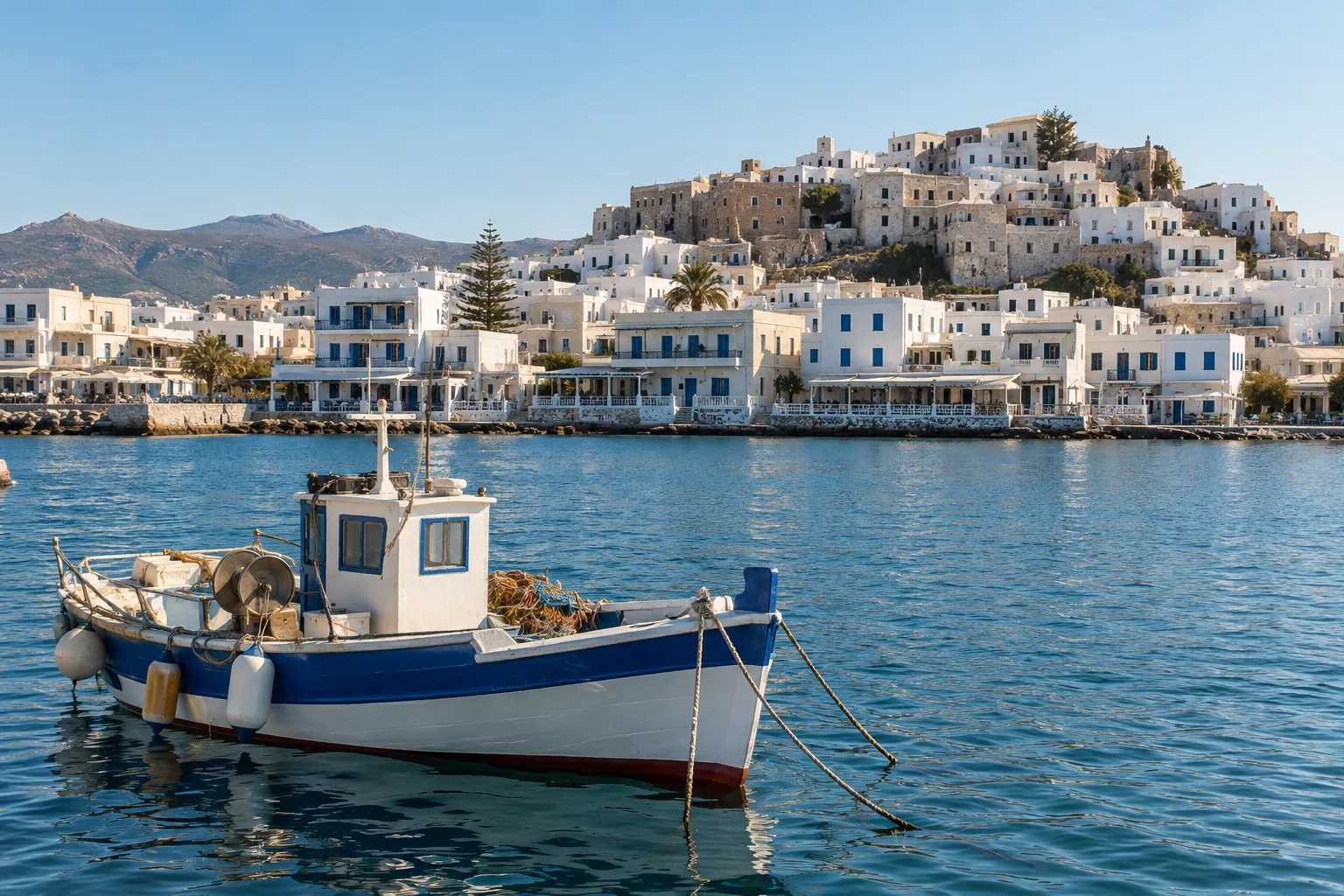
Spend time around Chora and the Portara.
The Portara is the great marble gateway left from an unfinished ancient temple of Apollo. It stands near the harbor and is one of Naxos’s most recognizable monuments. Read a little about the site before visiting so that the structure becomes more than a backdrop for a photograph.
Pair that visit with time in the old town rather than immediately moving to another part of the island. Wear shoes suited to the surfaces you will encounter, carry water, and take breaks in the shade. If steps or uneven ground are a concern, ask about the route in advance. The most useful walking plan is one you can comfortably enjoy.
04
Give the inland villages their own day.
Chalki, also written Halki, sits within the Tragea area, associated with olive groves and traditional settlements. Apeiranthos offers another inland stop, including an archaeological collection with material from Naxos and the Small Cyclades. Check current museum access before building the day around a visit.
Choose fewer stops and leave room for lunch. The appeal of an inland day is partly the change in landscape and pace, which is easy to miss if you are constantly watching the clock. If traveling by bus, plan around the service. If using a driver, agree on the stops and time available rather than assuming every place on a long wish list fits into one outing.
05
Make a beach day simple.
Agios Prokopios, Agia Anna, and Plaka are beach names to consider when looking at the island’s western coast. Compare the exact stretch you want to visit, its access, and the transport serving it. Confirm any sunbed or service charges on site rather than assuming facilities are included.
Take the day’s weather into account and ask locally about the conditions. A beach that looks ideal in a photograph may feel different in wind. Decide whether you want a day centered on swimming, a long lunch near the water, or a shorter visit after another outing. That decision can be more useful than chasing a universal best-beach recommendation.
06
Money, power, and everyday essentials.
Greece uses the euro. Check the currency shown when paying and review any conversion choice before accepting it. Keep some euro cash for smaller transactions without assuming every business has the same payment arrangements. Check your own bank’s withdrawal and foreign-transaction charges before traveling.
The official tourism guidance lists 230 V / 50 Hz power and Type F plugs. Check your device’s input label and bring the appropriate adapter. An adapter changes the plug connection, not necessarily the voltage. The European emergency number is 112. Save your accommodation address and your travel contacts on your phone as well.
07
A three-day outline you can adjust.
Use one day for Chora, the harbor, and the Portara, keeping enough time for a meal and an unhurried walk. Give another day to a beach that fits your transport plan. Use the third for an inland outing with one or two main stops. Change the order according to weather, opening times, and how you feel after arrival.
This outline is a starting point for a land stay, not a description of any particular cruise itinerary. If visiting on a sailing, work from your actual port hours and the ship’s return instructions. Before booking any trip, check current entry requirements for your citizenship and any transit countries. The links in this guide are intended to make the next check easier, especially when schedules change.
CONTINUE READING
Read the Greek islands destination story