
01
The arrival is only the beginning.
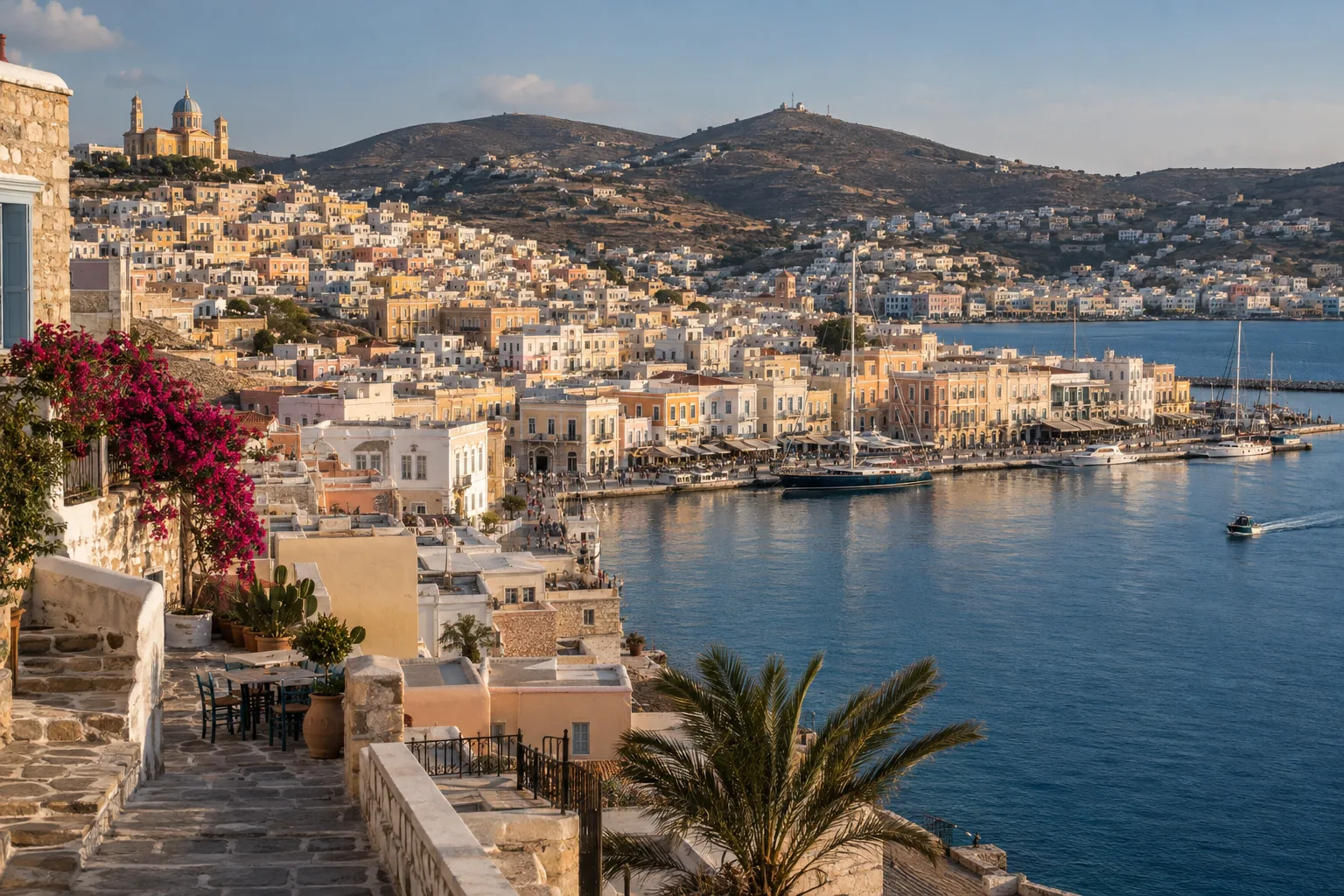
A harbor comes into focus in layers. First there is the outline of land. Then the buildings separate into streets, balconies, warehouses, churches, and homes. By the time you step ashore, the island has stopped being a shape on an itinerary and started becoming a place where people are going about their day. That change of scale is one of the pleasures of arriving by sea.
The Greek islands reward this kind of attention because their differences are substantial. Greece’s official tourism organization groups them into regions including the Cyclades, Ionian Islands, Dodecanese, and North Aegean. The coastline itself ranges from sandy beaches and sheltered coves to pebbled shores and volcanic landscapes. The familiar white-and-blue image is one part of a much larger picture.
A useful way to begin is to put aside the idea of finding the definitive Greek island. Ask instead which kind of place you would enjoy getting to know. A working town, a rural landscape, and a historic quarter offer different forms of pleasure, even when each ends the day beside the same blue sea.
02
Syros: an island with a city at its heart.
Ermoupoli, on Syros, offers a different architectural language from the whitewashed village that many visitors expect of the Cyclades. Neoclassical buildings, a substantial harbor town, and a cultural calendar give the island an urban dimension. Above it, Ano Syros adds another layer to the experience of the place.
The appeal here is partly the chance to spend time somewhere that does not need to be understood entirely through a beach. A square can be the center of an afternoon. Architecture can give a walk its direction. A theater or exhibition can become the reason for an evening rather than something squeezed between the return from an excursion and dinner.
For travelers who enjoy cities but want the setting of an island, this is an interesting combination to consider. You can begin with the harbor and continue into the streets without requiring every hour to be a major event. Look at the relationship between the buildings, the slopes, and the water. The shape of the town is part of its character.
03
The story continues above the harbor.
Syros also offers a reminder that the islands have layered religious and cultural histories. Its municipal and national tourism material describes the relationship between Ermoupoli and the older settlement of Ano Syros, including the presence of Orthodox and Catholic traditions. Seen from the harbor, the hills are more than a pleasing arrangement of buildings.
You do not need a complicated itinerary to engage with that history. A considered walk, a guided visit, or an explanation of the places you are looking at can provide a framework. Without it, the island may remain a collection of pretty surfaces. With it, differences in architecture and settlement become easier to notice.
This is one reason to build a trip around interests rather than a ranking of famous destinations. Someone drawn to architecture, religious history, or the way a town developed may find lasting interest in places that occupy less space in the usual vacation imagery. Being curious about one specific subject can make a destination feel larger.
Choose the life you want to spend time around, as well as the view you want to see.
04
Naxos: look inland as well as out to sea.
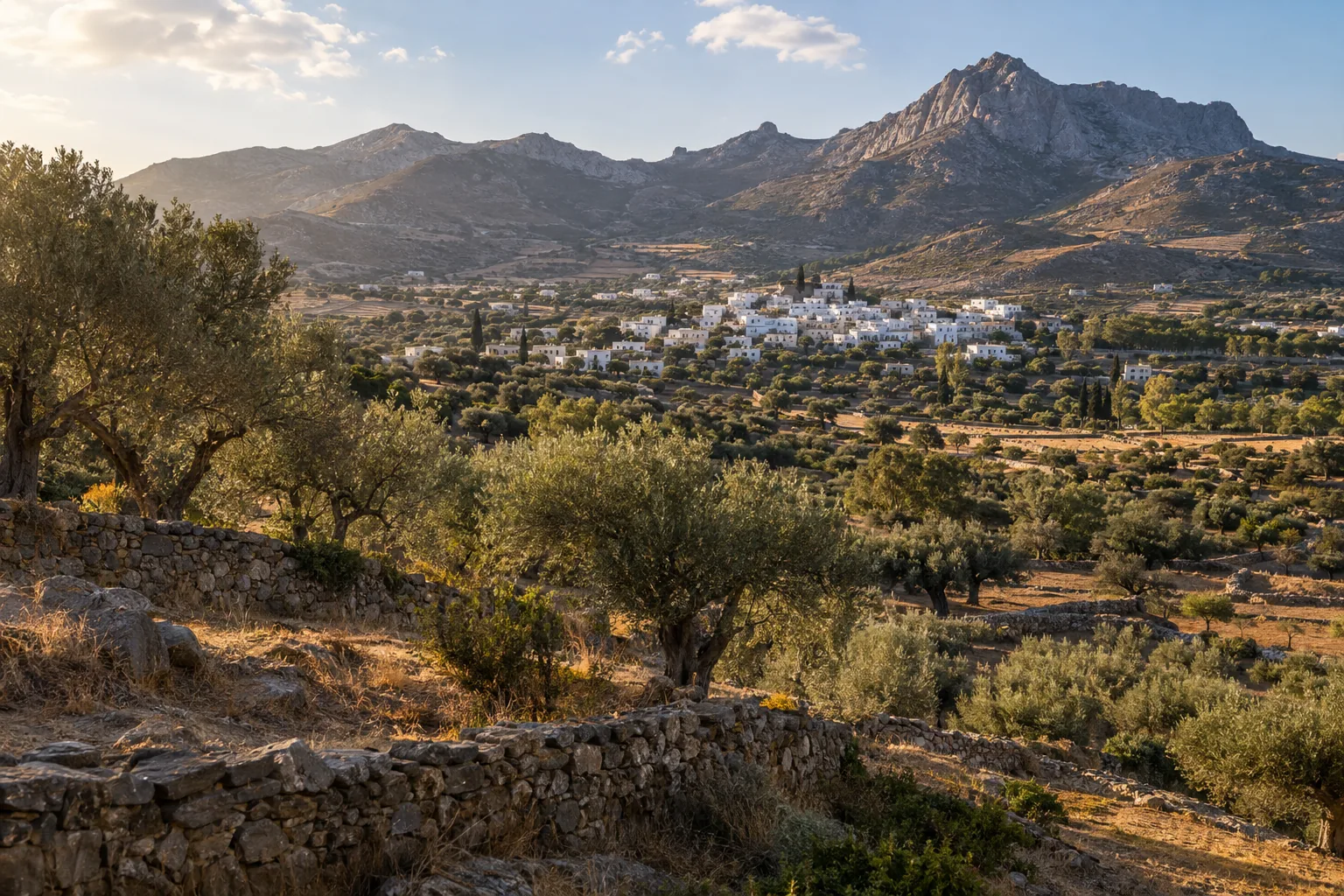
Naxos is the largest island in the Cyclades, and the region’s tourism material emphasizes its fertile landscape as well as its coastline. That distinction is worth holding onto. An island can be a place of cultivation, villages, and working land as much as a place of beaches. The view away from the water can be just as revealing.
Imagine making space for an inland day rather than treating it as time borrowed from the coast. The point is not to race through a series of villages. It is to notice how the scenery changes, to stop for a meal, and to understand something about the island beyond the place where you are sleeping. An agricultural landscape asks for a different kind of attention from a waterfront promenade.
That contrast can also make a beach afternoon more enjoyable. After a day of movement and observation, the simplicity of sitting by the sea has a different weight. Variety does not have to mean changing hotels or crossing to another island. Sometimes it is already present within the place you chose.
05
A doorway into the ancient island.
At Naxos harbor, the Portara is the surviving marble gateway of an unfinished ancient temple associated with Apollo. The municipal tourism site dates the temple project to the sixth century BCE. The structure is a powerful image, but the unfinished building behind it is also an invitation to think about what survives and what must be imagined.
A monument often asks more of a visitor than taking in its silhouette. What was planned here? What remains? Why has this particular fragment become so important to the identity of a place? A little context can make even a relatively short visit more memorable because it gives the eye something to look for.
It also changes the relationship between a famous sight and the rest of the day. Rather than treating the monument as proof that you have completed Naxos, let it begin a wider interest in the island. A harbor, a village, a collection in a museum, and a meal can then become connected parts of a visit instead of separate items to finish.
06
Rhodes: stone, shade, and a different chapter.
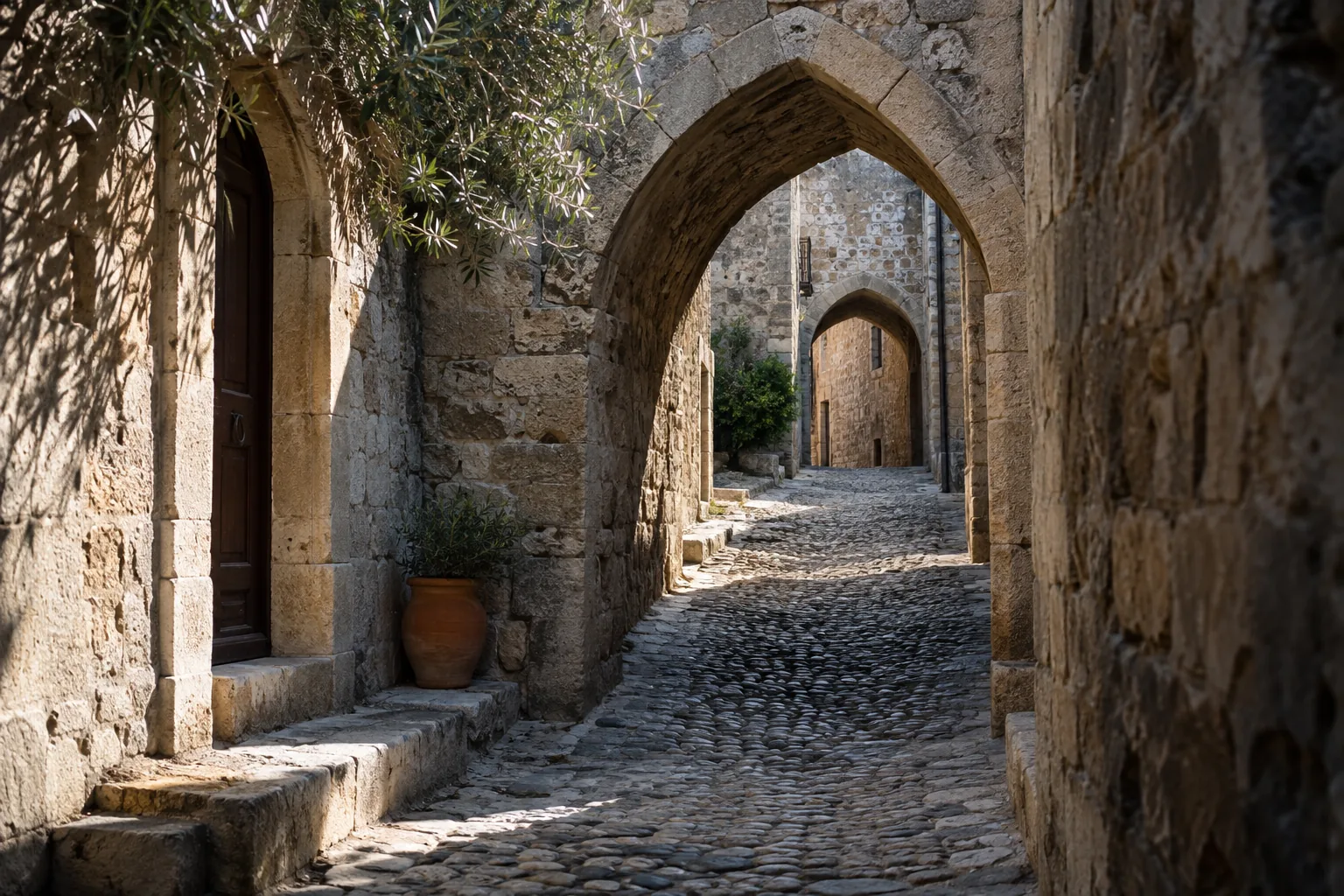
Rhodes brings another architectural and historical world into view. Its medieval town contains buildings and religious monuments associated with different periods and communities. The municipality’s visitor material includes churches, mosques, and a synagogue among the places that help tell that story. This is a setting where the texture of a street can prompt questions about who built, used, and changed it.
The pleasure of walking here need not depend on covering the largest possible distance. A stone passage, an opening into a square, or the change from bright sun to shade can hold your attention. A guide can help you read those details without asking you to arrive already knowing the chronology.
It is also a useful corrective to the idea that all island visits should look alike. If your strongest interest is history and architecture, that should influence the places you choose and the time you allow. A destination can be famous for several reasons, but your own reason for visiting can be much more specific.
07
The meal is part of the pace.
An itinerary reveals its priorities in small ways. If every lunch is a hurried gap between activities, the trip may be asking you to see more than you have time to enjoy. If a meal is allowed to become part of the afternoon, there is room to notice the setting and talk about what you have seen. Neither rhythm needs to occupy every day.
For a couple or a group, it helps to discuss that pace before departure. One person’s ideal day may involve a long walk and several stops. Another may be looking forward to a table in the shade and very little urgency. These preferences can coexist, but they are easier to accommodate when nobody has to discover them through frustration.
Choose a few things that deserve a reservation or a firm plan, then leave some of the ordinary hours open. A destination becomes personal through repetition as well as novelty. Walking the same street at a different time or returning to a place you enjoyed can reveal something that another new stop would not.
08
Choose a route that lets the differences matter.
A cruise and a stay ashore create different relationships with an island. A sailing can introduce you to several places while keeping one accommodation. A land stay can give you more evenings, mornings, and opportunities to return to a particular neighborhood. The useful comparison is how each arrangement supports the experiences you care about.
Look at the actual time available in each place. The name of an island on a route does not explain the day you will have there. Transport, arrival arrangements, and the return journey all occupy time. Once those are understood, the remaining hours can be planned with more confidence and less pressure to do everything.
The Greek islands offer enough variety for many journeys. You do not have to compress those possibilities into one. Choose a place whose character interests you, then give it the attention it deserves. The view may be what brings you there. The life around that view is what gives you a reason to remember it.