
01
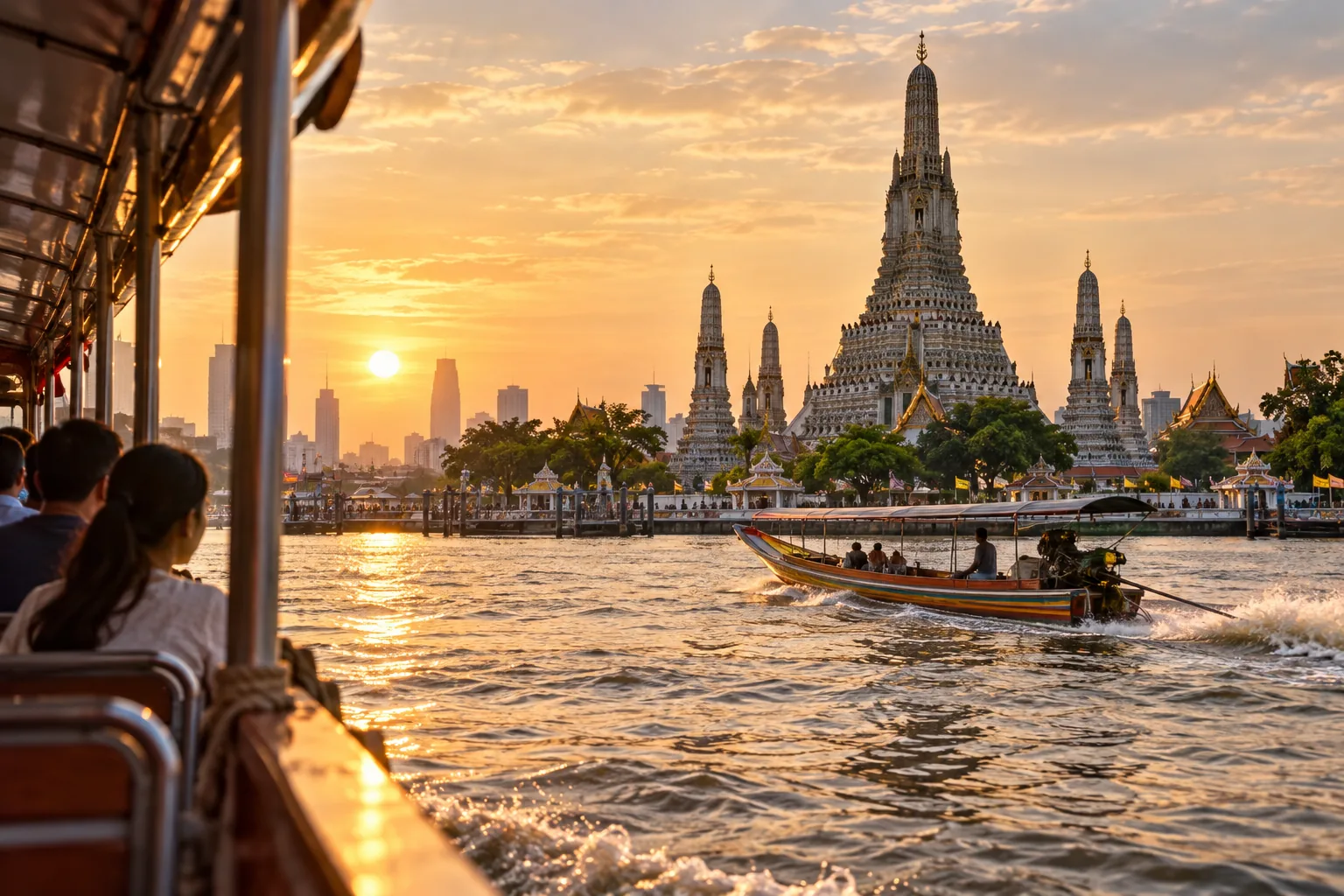
Let the river introduce Bangkok.
Bangkok can seem to arrive all at once. Traffic gathers at a junction, a train passes overhead, and the next street opens onto a small restaurant where lunch is already underway. Then you reach the Chao Phraya River and the city takes on another shape. Buildings become a shoreline. A pier becomes a meeting point. The water helps you see how different parts of the city sit beside one another.
There is pleasure in approaching a place from this slower viewpoint, even when the boat itself is busy. Watch the mix of everyday journeys and visitor excursions. Notice the difference between a hotel landing and a public pier. The river is part of the working city as well as one of its most recognizable settings. Making time for it gives the visit a sense of place that a sequence of car rides may miss.
Along the river, Bangkok’s temples invite more than a quick photograph. Wat Arun, Wat Pho, and the Grand Palace area offer different architectural and historical experiences. Choose a visit you actually want to understand, allow time to listen to a guide or read the interpretation, and arrive prepared for a place of worship. A famous site becomes more interesting when you know what you are looking at.
02
Follow your appetite into a neighborhood.
A city is easier to remember when it has tastes attached to it. One meal might be a carefully planned evening, another a simple lunch close to where you happen to be walking. You do not need to make every meal into a search for the most celebrated address. It can be enough to sit somewhere that fits the day, understand what is being prepared, and enjoy it without already thinking about the next stop.
Bangkok’s neighborhoods give those meals different settings. Around Yaowarat, the city’s Chinatown, the street life and food businesses offer a different atmosphere from a riverside dining room or a quiet cafe near your hotel. The point is not to choose a single version of Bangkok as the real one. A large city contains different kinds of daily life, and a good visit makes space to notice more than one.
If you are curious about food but unsure where to begin, a guided food walk can provide context as well as choices. Ask what the experience covers, how much walking it involves, and how dietary requirements will be handled. A useful guide can explain ingredients and customs while giving you room to ask the questions you might otherwise keep to yourself. That confidence can stay with you for the rest of the trip.
03
Look back toward Ayutthaya.
North of Bangkok, Ayutthaya gives the journey historical depth. Founded around 1350, it became a major capital and a center of trade and diplomacy before its destruction in 1767. The surviving monastery remains and towers belong to a city that once connected people and ideas from far beyond its own region. UNESCO recognizes the historic city as a World Heritage site.
Among the remains, scale becomes part of the story. There is space where buildings once stood and enough surviving structure to suggest what has been lost. A thoughtful visit helps connect those physical traces to the life of the former capital. Without that context, one temple ruin can blur into the next. With it, the spaces become easier to read.
For a visitor, the most useful question is what a guide can help you understand, not how many stops fit into the day. Leave room for the journey there, the conditions on the ground, and a break between visits. This is a place to look closely. It deserves more than being treated as an extra item attached to a Bangkok itinerary.
The most memorable part of a place is often the part you finally gave enough time.
04
In Chiang Mai, notice the change of scale.
Chiang Mai introduces another part of Thailand, with northern cultural traditions and a city landscape that invites time in smaller streets. The old town, temple visits, workshops, cafes, and surrounding mountains offer different ways to spend a day. You can make an itinerary here, but it is worth leaving part of it open for a place you discover on foot and want to return to.
A morning might begin with a temple visit and continue over lunch. An afternoon could belong to a craft workshop or a neighborhood you have not explored. Neither needs to be hurried in order to count. The appeal is partly in having enough time to settle into an ordinary rhythm, to choose somewhere to sit, and to recognize a street when you come back along it.
Northern food is another reason to pay attention to where you are. A bowl of khao soi offers one introduction to a regional cooking tradition. Let the meal begin a conversation about what else is prepared locally, how flavors vary, and what someone recommends for your interests. A country becomes harder to flatten into a single image when you begin to notice these differences.
05
The coast is a choice, not a single destination.
For many travelers, a few days by the sea are part of the picture from the beginning. It helps to think carefully about what those days should feel like. Do you want to walk to restaurants, spend most of your time at a resort, or arrange outings on the water? A dramatic view may bring you to a place, but the daily practicalities decide whether you enjoy staying there.
Thailand has coastal destinations on different sides of the southern peninsula, and a beach stay needs to be matched to the route and travel dates. Resist treating every island name as an interchangeable promise of good weather and easy connections. Ask about the specific setting, how you reach it, and what happens if a planned boat outing cannot go ahead. A well-chosen base still offers a pleasant day when the original plan changes.
The best beach chapter may be the least crowded part of the itinerary. After days of moving through a city or traveling between regions, the pleasure can be a familiar breakfast table and an afternoon with very little required of you. Give that part of the trip the same respect as an excursion. Rest is a legitimate reason to travel.
06
Make curiosity part of being a good guest.
A temple is a living religious space before it is a backdrop. Follow the dress and photography instructions at the place you visit, observe where shoes are removed, and avoid interrupting people who are there to worship. A moment spent watching how a space is being used can tell you more than arriving with a fixed idea of the picture you want to take.
The same attention belongs in markets, workshops, and neighborhoods. Ask before photographing someone closely. If you want to watch a craft being made, choose an experience where the maker welcomes that interest. An explanation of time, material, and technique can change how you see something that might otherwise be reduced to a souvenir.
You do not need to arrive knowing everything. Good questions, patience, and a willingness to follow local guidance go a long way. Travel becomes more rewarding when the people who live in a place have room to explain it in their own terms.
07
Choose the Thailand you have time to enjoy.
A country this varied can tempt you into too many departures. Count the hours spent checking out, reaching an airport, waiting, arriving, and settling into another room. Those hours belong to your holiday too. Adding a place can enrich the trip, but it can also take time away from the places you chose first.
For one journey, Bangkok and Chiang Mai may give you enough contrast. For another, a city stay followed by the coast may fit better. There is no single route that proves you have seen Thailand properly. Choose the combination that serves your interests, then allow enough days for each part to develop beyond an arrival and a departure.
That is where the trip can become personal. You return to a meal you enjoyed. You ask a second question. You recognize something in a building or a bowl of food because of what you learned the day before. The first impression gives you a reason to come. The time you allow yourself gives you a reason to remember.
CONTINUE READING
Plan with the Thailand travel guide